

Industrial Air Pollution Control Equipment for Boilers
The flue gas emitted by industrial boilers includes dust, ash, and other particles that need to be handled in order to comply with environmental norms and maintain efficient plant operations. The Pollution Control Equipment offered by Shanti Boilers is capable of reducing emissions by the boilers operating on solid fuels, biomass, coal, wood, agro-waste, and multi-fuel.
Established in 2006, the Shanti Air Handling (AH) Division specializes in designing and manufacturing reliable air pollution control systems for industries across India. From cyclone dust collectors to advanced bag filtration systems and wet scrubbers, we provide complete solutions that help industries improve environmental compliance while maintaining efficient boiler performance.
As a Total Heating Solutions Company, we deliver not only industrial boilers but also the complete balance of plant, including pollution control equipment, air handling systems, and associated accessories.
Comprehensive Air Pollution Control Solutions
Every industry has different fuel characteristics, emission levels, and operational requirements. Our pollution control systems are engineered to deliver effective particulate removal while ensuring low maintenance, reliable operation, and long service life.
Our product range includes:
Each system is designed according to boiler capacity, fuel type, emission load, and applicable environmental requirements.
High-Efficiency Dust Collection for Industrial Boilers
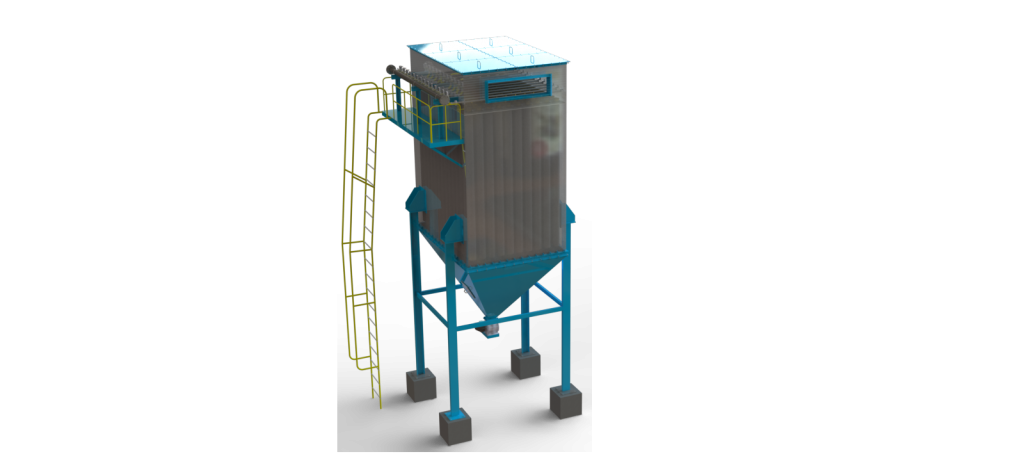
Pulse Jet Bag Filters are among the most effective air pollution control systems for industrial boilers operating on solid fuels. These systems efficiently capture fine fly ash and dust particles before flue gases are discharged into the atmosphere.
Flue gas enters the filtration chamber, where specially designed high-temperature filter bags trap suspended particulate matter. Clean gas passes through the filter media while accumulated dust remains on the outer surface of the bags.
The cleaning process operates automatically using compressed air pulses. Each row of filter bags is cleaned sequentially through a programmable controller, ensuring continuous operation without interrupting the filtration process.
Key Features
Applications
Reliable Primary Dust Separation System
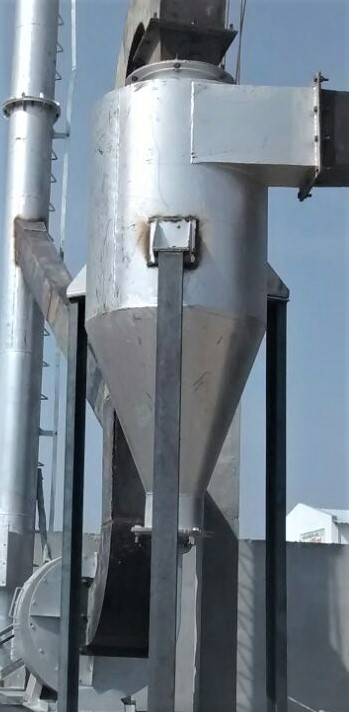
Single Cyclone Dust Collectors offer an efficient and cost-effective way to extract large size particulates from boiler flue gases. In these dust collectors, centrifugal force is used to separate dust particles from the gases before they are discharged through the chimney.
The unique design of the cyclone produces a high-speed spiral flow of air, creating centrifugal force. Due to the higher mass of dust particles, they move towards the walls of the cyclone and eventually fall into the collector hoppers.
They perform exceptionally well for biomass-based fuels, as they effectively capture the larger ash particles produced during combustion.
Features
Ideal Fuels
High-Capacity Industrial Dust Separation
Mechanical Cyclone Dust Collectors are engineered to handle higher gas volumes and demanding industrial applications. Designed using advanced vortex separation principles, these systems effectively separate coarse dust particles while maintaining stable airflow through the boiler system.
Shanti Boilers manufactures cyclone collectors using durable materials, including cast iron cones and vanes for applications involving highly abrasive fuels. This enhances equipment life while reducing maintenance requirements.
Advantages
Enhanced Efficiency Dust Separation
Multi Cone Dust Collectors are designed for applications requiring higher dust collection efficiency than conventional single cyclone systems. Multiple cyclone elements work simultaneously to improve particulate separation across a wider range of particle sizes.
These systems are widely used as primary dust collectors before secondary filtration equipment, such as bag filters, to ensure optimal performance.
Benefits
Advanced Gas & Particulate Control
Wet Scrubbers are designed to remove particulate matter as well as certain gaseous pollutants from industrial exhaust streams. The flue gas comes into direct contact with the scrubbing liquid, allowing contaminants to be captured before clean gases are released into the atmosphere.
These systems are highly suitable for applications where both dust control and gas absorption are required, ensuring comprehensive environmental compliance.
Key Features
Boiler Capacities Supported
Shanti Pollution Control Equipment can be designed and supplied for virtually every industrial boiler capacity, from small packaged boilers to large process steam generation systems.
Customization Parameters
Each solution is meticulously customized considering the following factors:
Factors Affecting Cyclone Efficiency
The efficiency of a cyclone dust collector depends on several engineering parameters, including:
Generally, higher inlet velocity and larger dust particles improve collection efficiency.
Smaller cyclone diameters provide better particle separation, while larger cyclones are better suited for handling high gas volumes with coarser particulate matter. Selecting the correct configuration ensures optimum performance and longer equipment life.
Why Choose Shanti Boilers for Pollution Control Equipment?
Shanti Boilers provides integrated pollution control solutions that complement industrial boiler systems, enabling customers to achieve cleaner combustion and improved environmental performance.
Industries We Serve
Our pollution control equipment is widely used across various industrial sectors:
Frequently Asked Questions
What is a Solid Fuel Fired Thermic Fluid Heater?
It is an indirect heating system that uses thermal oil instead of steam or water to provide high-temperature process heating using solid fuels such as coal, wood, and biomass.
What fuels can be used?
The heater operates efficiently on coal, wood, rice husk, agro waste, sawdust, wood waste, biomass, coconut shells, and groundnut shells.
What temperature can it achieve?
Shanti Solid Fuel Fired Thermic Fluid Heaters can deliver process temperatures of up to 280°C.
What is the available heating capacity?
The heaters are available in capacities ranging from 100,000 kcal/hr to 4,000,000 kcal/hr.
Do thermic fluid heaters require water treatment?
No. Since thermic fluid is used as the heating medium instead of water, water treatment, scaling, and corrosion issues are eliminated.
Which industries commonly use thermic fluid heaters?
They are widely used in plywood manufacturing, food processing, pharmaceuticals, chemicals, textile processing, solvent extraction plants, resin manufacturing, and other industries requiring high-temperature process heating.